Bedding Care
Caring for a Naturepedic Alpaca Duvet Insert: What to Know Before Washing
Alpaca fiber brings light warmth and moisture management to a bed, but a filled duvet insert is not an ordinary household blanket. Its fibers, quilting, and cotton shell all need consideration when cleaning. The safest routine is usually preventive: protect the insert with a removable cover, air it periodically, and treat small marks carefully. Before washing, check the current care label and manufacturer guidance—because for this particular insert, an improvised wash can carry a real risk of shrinkage or uneven results.
Why alpaca bedding calls for a thoughtful approach
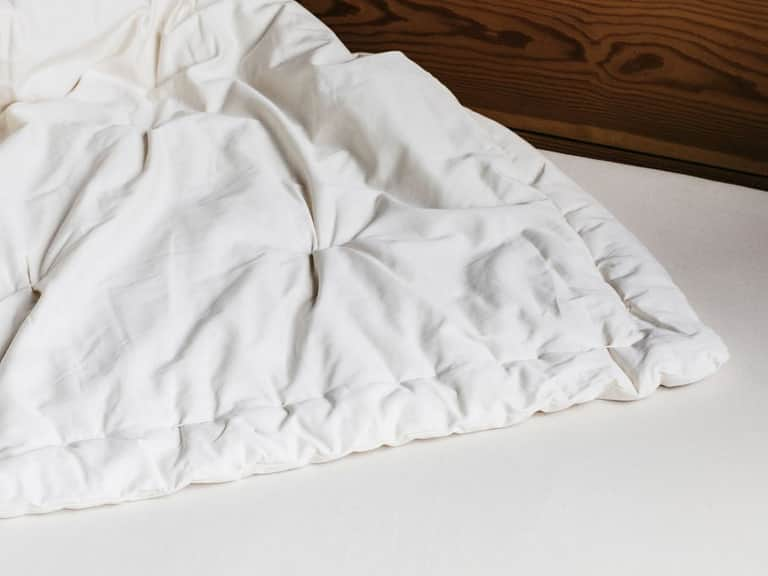
The Naturepedic Alpaca Duvet Insert Comforter combines alpaca fill with an OCS-certified organic cotton shell. The product is offered in different fill weights, and its care instructions begin with a simple recommendation: spot clean only. If the insert truly requires a full clean, the guidance recommends professional laundering rather than dry cleaning. Home washing is described as a last resort, with specific precautions.
That distinction matters. “Natural fiber” does not mean “safe to wash however you wash cotton sheets.” The behavior of a filled comforter depends on more than the fiber name. Water, agitation, heat, detergent residue, the size of the washing machine, and the time needed for the interior to dry can all affect the finished piece. Alpaca fiber and the cotton shell also respond differently to moisture and heat, while the filling is held in place within a large, quilted construction.
Care details can change by product, model, or label revision. Treat this article as a practical guide to interpreting the listed instructions, not as a substitute for the care label supplied with your duvet insert. If the label differs from a general recommendation, follow the label or contact the manufacturer before proceeding.
Start with prevention: use a duvet cover
A duvet cover is the first line of defense against everyday soil. It takes the direct contact of skin, sleepwear, dust, and small spills, while the insert remains protected inside. Unlike a filled comforter, many covers are designed to be removed and laundered routinely, though their own care label still applies.
Choose a cover that fits the insert without compressing it excessively. Secure the insert using the cover’s internal ties or fasteners, if present, so it does not bunch into one end during sleep. When changing the cover, take a moment to inspect the insert’s shell for marks, dampness, or a newly opened seam. Early attention can prevent a small issue from becoming a reason for a full wash.
Keeping the bed and sleeping area reasonably dry also helps. Allow the bed to air before making it in the morning, especially if the room is warm or the sleeper tends to perspire. This does not replace cleaning, but it can reduce lingering dampness around the bedding.
Air the insert before reaching for water
For routine freshness, airing is often a gentler first step than laundering. Remove the duvet cover and lay the insert across a clean, dry surface or hang it over a broad support where air can circulate. Choose a dry, well-ventilated place and avoid leaving the comforter folded tightly or pressed against a damp wall.
Direct sun can be useful for some bedding, but exposure should be cautious. Strong sunlight and heat may affect color or fabric over time, and the product guidance emphasizes airing rather than prescribing a fixed sunning schedule. If you air the insert outdoors, select a clean location, keep it away from moisture and dirt, and avoid leaving it unattended for long periods. When uncertain, use shade and good airflow.
Fluffing the comforter gently can help restore its shape after use. Support the fabric with both hands and redistribute the loft without pulling at the quilting or seams. Avoid vigorous shaking, twisting, or beating; these motions can stress stitching and may encourage filling to shift. If the insert is damp, airing is not a substitute for complete drying—moisture must be addressed promptly and thoroughly.
How to respond to a small stain
When a mark appears, act promptly but keep the treatment local. First, remove the duvet cover and identify whether the stain is on the cotton shell or has reached the filling. Blot fresh liquid with a clean, absorbent cloth. Press lightly to lift moisture rather than rubbing it outward or forcing it deeper into the fabric.
For a small spot, the product’s guidance allows careful spot cleaning. Use a small amount of mild soap with very little water, and test an inconspicuous area first if practical. Work gently with a clean cloth, applying moisture only where needed. Then remove soap residue with another cloth lightly dampened with clean water. Avoid soaking the shell: water that penetrates the fill can be difficult to remove, and leftover detergent may attract soil or leave a visible ring.
- Blot rather than scrub, and use clean cloths so the stain is not transferred to another area.
- Use minimal moisture and a mild detergent; do not use bleach or fabric softener.
- Keep the insert supported while treating it so wet filling does not sag or pull on the seams.
- Allow the treated area to air-dry fully before putting the duvet cover back on.
Different stains can call for different methods, and some substances may set when exposed to heat or the wrong cleaner. Do not apply stain removers, solvents, enzyme products, or strong household cleaners without checking that they are suitable for the product. If the stain is large, oily, persistent, or has reached the fill, ask a professional cleaner about the insert’s materials and care requirements before treatment.
When professional laundering may be the better choice
Spot cleaning is not always enough. A broad spill, a stain that has penetrated the shell, or a musty odor that remains after airing may require more thorough care. For the Naturepedic alpaca insert, the stated recommendation in that situation is professional laundering—not dry cleaning. That wording is important: dry cleaning and laundering are different processes, so do not assume one is an acceptable substitute for the other.
Before handing the comforter over, explain that it contains alpaca fiber and has an organic cotton shell. Ask whether the cleaner can follow the product’s guidance, manage a bulky filled item, and dry it completely without high heat. If the cleaner cannot confirm an appropriate process, pause and contact the manufacturer for advice. A professional service should be able to discuss how it will handle the insert rather than offering a generic promise that all comforters can be cleaned the same way.
Professional care can be especially sensible when the insert is too large for a household machine or when the spill affects a substantial area. A crowded washer cannot move and rinse a bulky comforter effectively. Even if the shell looks clean afterward, trapped moisture inside the fill can remain a problem.
If home washing is unavoidable
The product guidance treats home laundering as an exception, not routine care. If you decide that washing at home is unavoidable, read the current label first and make sure your washer can accommodate the comforter without a center agitator. A machine that is too small, or one that compresses the insert tightly, may not clean or rinse it evenly. When in doubt, stop and choose professional laundering.
The listed home-washing directions specify warm water, a mild detergent, and a delicate cycle in a machine without a center agitator. Do not use bleach or fabric softener. Add one or two extra rinse cycles to help remove detergent from the shell and filling. Do not overload the machine with other laundry; the insert needs room to move gently and rinse thoroughly.
Before starting, check for loose seams or damage that could worsen in water. Make sure the care label does not prohibit machine washing for your specific item. If you proceed, avoid vigorous handling when transferring the wet comforter. A saturated insert can be heavy, so support its weight across both arms rather than lifting it by a corner or edge.
Important: The care information warns that high heat can cause wool to shrink considerably and that results may be unpredictable because of the comforter’s thickness. If you are unsure about washing or drying it at home, professional laundering is the more cautious option.
Drying is as important as washing
A comforter can feel dry on the outside while its interior remains damp. This is one of the most consequential parts of alpaca bedding care: moisture trapped in dense fill may lead to odor, clumping, or an uncomfortable sleeping surface. Drying should continue until the entire insert—not only the cotton shell—has dried completely.
The product instructions call for low heat and specify drying well beyond the point when the outer fabric feels dry. They also warn against high heat because it can shrink the wool substantially. Use the lowest appropriate setting, and check the care label before using a dryer. A bulky insert may need a long drying period; inspect it at intervals and handle it gently so the filling remains evenly distributed.
If the dryer is not large enough to let the comforter tumble freely, do not force it into the drum. Air-drying can be part of a cautious approach when it can be done in a clean, well-ventilated space, but ensure the item is supported across a broad surface and has airflow on both sides. Turn or reposition it carefully as needed. Do not fold or store it while any part remains cool or damp to the touch.
Never rely on a warm exterior as proof that the fill is dry. Check different sections, seams, and the center of the insert. If you cannot confirm thorough drying, ask a professional service for help rather than putting it back on the bed.
Common mistakes to avoid
Careful handling is mostly a matter of resisting shortcuts. A product marketed for comfort and breathability still has a specific construction and care routine. Avoid these common missteps:
- Washing it automatically with the bedding. Sheets and duvet covers may be washable, but the insert may not be suited to frequent laundering.
- Using a center-agitator washer. The listed home-washing guidance specifically calls for a machine without one.
- Adding bleach or fabric softener. Both are excluded from the care instructions.
- Using high dryer heat. Heat can shrink wool considerably, and the comforter’s thickness makes outcomes difficult to predict.
- Putting it away while damp. Moisture can remain inside after the shell feels dry.
- Scrubbing a stain aggressively. Rubbing can spread the mark and place unnecessary stress on the fabric.
- Assuming all wool or alpaca products have identical care rules. Fill blends, quilting, shell fabric, and manufacturer guidance differ.
A simple care rhythm
Most routine care can be organized around the removable cover rather than frequent cleaning of the insert. Launder the cover according to its label, air the insert when changing it, and check for spots or damage before putting the cover back on. Keep a record of the insert’s care instructions somewhere easy to find; that small step can prevent guesswork months later.
Quick checklist
- Use a duvet cover to shield the insert from everyday soil.
- Air the insert in a dry, ventilated place when changing the cover.
- Blot small spills and use minimal moisture for spot cleaning.
- Check the care label before any full wash or stain treatment.
- Choose professional laundering if a full clean is necessary and home care feels uncertain.
- If washing at home, follow the specified delicate-cycle, detergent, rinse, and low-heat guidance.
- Confirm that the interior is completely dry before reuse or storage.
For seasonal storage, clean and dry the insert first, then place it in a breathable storage bag or clean cotton cover. Avoid sealing it away while damp or compressing it tightly for an extended period. Store it in a cool, dry location away from direct sunlight and moisture. If the insert develops an unexplained odor or visible sign of dampness in storage, air it thoroughly and investigate the cause before putting it back on the bed.
The guiding principle: clean less, protect more
Good alpaca comforter care is not about washing on a fixed schedule. It is about limiting soil, responding to accidents without delay, and respecting the materials when deeper cleaning becomes necessary. A duvet cover and regular airing can reduce how often the insert needs attention, while gentle spot cleaning may address small marks before they spread.
When the whole insert needs cleaning, the Naturepedic guidance favors professional laundering. Home washing is a fallback with specific conditions, and complete low-heat drying is essential. The care label remains the final reference, especially if it differs from general advice or if your insert has a stain or condition not covered here. With a measured routine, you can help preserve the comforter’s loft and shell while avoiding the unnecessary wear of repeated washing.