Bedding care · Seasonal guide
Wool Bedding Through the Seasons: How to Choose and Care for a Natural Layer
A wool comforter is not simply a winter blanket. Its warmth depends on how much wool it contains, how it is quilted, and how it fits into the layers on your bed. Learn what to look for, how to adapt wool bedding to changing weather, and how to care for it without guessing at the instructions.
A bed changes character with the weather. On a cold night, it can become a sheltered pocket of warmth; on a mild evening, the same layers may feel excessive. The fibers beneath the cover matter, but so do the bedroom’s temperature, your own tendency to sleep warm or cool, and the way bedding is arranged. Wool offers one natural option for people seeking an insulating layer that can also manage moisture. Choosing well, however, means looking beyond the word “wool” on a label.
Wool comforters differ in fill weight, shell fabric, quilting, and care requirements. Some are designed for lighter warmth, others for colder conditions, and some use two connected layers that can be adjusted. A washable wool product is not the same as one that should only be spot-cleaned. The practical guide is always the maker’s care label and product instructions: fiber content alone cannot tell you how a finished comforter should be cleaned.
Why wool can work across changing weather
Wool fibers have a naturally crimped structure that traps air, helping create insulation without requiring a dense, solid mass of filling. Wool also takes up moisture vapor, a property that can help bedding feel less clammy when humidity rises. These qualities make wool useful in a range of conditions, but they do not make every wool comforter equally cool or equally warm. A heavily filled comforter will generally provide more insulation than a lightweight one, while room temperature and the rest of the bedding remain important parts of the equation.
The word “breathable” can be misunderstood. It does not mean a comforter will keep every sleeper cool in every room. A warm bedroom, a thick duvet cover, flannel sheets, and several extra blankets can all change how much heat a sleeper experiences. Wool is one part of a bedding system, not a thermostat. If you regularly wake feeling too warm, changing the cover or removing a layer may be as useful as choosing a different fill.
The feel of wool also depends on its construction. Quilting, stitching, and tufting hold filling in position, influencing how evenly it lies across the bed. A well-secured fill is less likely to migrate into empty corners or form uneven patches. The shell fabric affects touch and airflow, too: cotton is common, with percale and sateen offering different surface feels. Read the full material description rather than assuming that all wool bedding has the same texture or performance.
Start with your room and your sleep habits
Before comparing weights, observe the conditions where you sleep. A bedroom that stays cool through winter calls for a different setup from a centrally heated room that remains warm overnight. Note whether you sleep hot or cold, whether you share the bed with someone whose preferences differ, and whether you like the sensation of a heavier cover. These everyday details are often more helpful than choosing bedding by season name alone.
- For warm rooms or warm sleepers: Consider a lighter wool comforter or a thinner layer that can be paired with a breathable cover. Keep other insulating layers modest.
- For cool rooms or cold sleepers: A medium or heavier comforter may be more suitable. Check the manufacturer’s description and fill weight rather than relying on a product’s name alone.
- For variable conditions: A modular or two-layer design may offer more flexibility than a single fixed-weight comforter.
- For shared beds: Think about whether a flexible layer arrangement lets each sleeper adjust warmth without rebuilding the entire bed.
Weight descriptions are useful clues, not a universal scale. A “lightweight” comforter from one maker cannot necessarily be compared directly with a lightweight option from another. Fill density, construction, dimensions, and shell all contribute to the final feel. When available, look for a stated fill weight or fill density and ask how the product is intended to be used. If that information is missing, the care label and detailed manufacturer description are especially important.
A seasonal approach: adjust the layers first
Seasonal bedding does not have to mean storing one complete bed and replacing it with another four times a year. A more adaptable approach is to start with a dependable base—such as sheets and a duvet cover—and change the insulating layer as conditions shift. A removable cover can be laundered more regularly than a filled comforter, while an extra blanket can be added temporarily during a cold spell.
Spring: leave room for sudden changes
Spring often brings fluctuating nights: a mild evening can follow a cold one, and a heated room may retain warmth after the outdoor temperature drops. A medium-weight wool comforter can work as a steady foundation, with a lighter blanket nearby for cooler nights. If you find yourself overheating, try removing the extra layer or switching to a lighter cover before assuming the wool itself is the problem.
Summer: choose the lightest arrangement that feels comfortable
In warm weather, the lightest option may be a thin wool comforter, a washable wool layer made for warmer use, or simply a breathable duvet cover without a substantial insert on especially hot nights. Product descriptions may identify a comforter as lightweight or suitable for warm climates, but your room’s ventilation and nighttime temperature still matter. Keep the cover clean and avoid piling on decorative layers that trap heat if you already sleep warm.
Autumn: add insulation in small steps
As nights cool, a wool comforter can return to the center of the bed’s arrangement. Rather than jumping immediately to the heaviest available option, begin with a lighter layer and see how the room feels after several nights. A duvet cover helps protect the comforter from everyday soil, while a separate blanket allows quick adjustments when early-season weather changes again.
Winter: match warmth to the room, not just the calendar
A colder bedroom may call for a medium- or heavier-weight wool comforter, particularly for sleepers who feel chilled at night. But winter rooms vary widely: a well-heated bedroom can be warmer than a springtime room in a poorly insulated home. Consider the actual sleeping environment, then adjust the cover and additional blankets. Overheating under multiple layers is a sign to revise the setup, not a requirement of winter bedding.
One comforter or a two-layer system?
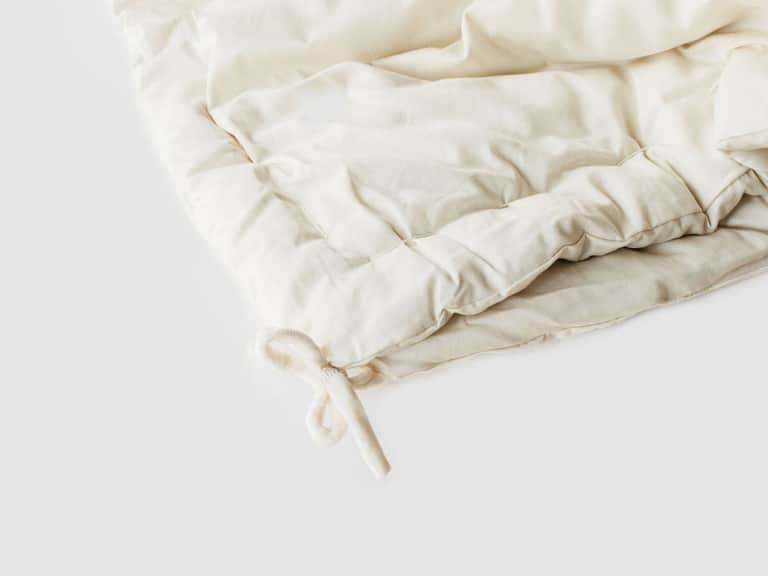
A single comforter is simple: choose a weight that suits the conditions you experience most often, and add or remove a light blanket when needed. A two-layer system can offer greater range. Some designs use separate comforters joined by ties at the corners and sides. The layers can be separated for milder weather and connected when more insulation is useful. This arrangement can be practical for a home with noticeable seasonal shifts or for people who prefer to fine-tune warmth.
For example, the All-Season Wool Comforter is described as two wool comforters connected with cotton ties. Its wool fill is held in place with hand-tufting and perimeter stitching, and it has an organic cotton sateen shell. The product information also describes airing and spot cleaning, and notes that cold-water machine washing may be possible without agitation. Because care methods can depend on construction and the maker’s latest directions, follow the instructions supplied with the comforter before attempting to wash it.
Layered systems do require a little more attention. Check that ties are secure before placing the comforter inside a duvet cover, and make sure the layers are aligned so they lie evenly. If the parts shift during the night, the bed may feel lumpy or develop cold areas. A properly sized cover and careful fastening can help maintain a smooth, comfortable surface.
Care begins with the label
Wool bedding care is product-specific. Some manufacturers permit machine washing under narrowly defined conditions; others recommend spot cleaning only. Washing a non-washable comforter can cause shrinkage, distortion, or changes to the wool batting. Even when a product is described as washable, the machine type, water temperature, cycle, detergent, spin setting, and drying method may all matter. Never treat “wool” as a complete set of care instructions.
- Read the label before the first wash. Confirm whether the whole comforter is washable, and note any restrictions on temperature, agitation, detergent, or drying.
- Protect it with a removable duvet cover. The cover receives much of the routine soil and can usually be washed more easily than the filled comforter. Wash it according to its own care label.
- Air the bedding periodically. If the maker allows it, airing in a dry, well-ventilated place can refresh bedding between washes. Follow any specific guidance about sunlight, as exposure can affect some fabrics and colors.
- Spot-clean cautiously. Use only a method permitted by the manufacturer. Avoid soaking the fill unless the care instructions explicitly allow it.
- Dry thoroughly. Moisture left inside a thick comforter can create problems. Use only the drying method specified by the maker, and do not store bedding until it is fully dry.
If machine washing is allowed, do not assume that a household washer can safely accommodate every size. A bulky comforter needs enough room to move without being compressed. If the manufacturer specifies a front-loading or commercial machine, treat that instruction as part of the care requirement. A crowded drum can clean unevenly and place stress on seams and quilting.
Keep the comforter clean between washes
The least demanding wash is the one that is not needed. A duvet cover helps reduce contact with body oils, perspiration, dust, and accidental spills. Make sure it closes securely and that internal ties are fastened to the comforter’s loops where provided. Regularly laundering the cover, pillowcases, and sheets keeps the surface layer fresh without subjecting the wool-filled piece to unnecessary washing.
A simple routine can help. When changing sheets, inspect the comforter for spots, loose stitching, or shifting fill. Let it air briefly if the manufacturer recommends airing and conditions are suitable. Fluff it gently if the product instructions permit. These small checks can reveal an issue before it becomes harder to address, while keeping care proportionate to the needs of the material.
Store seasonal bedding only when it is clean and thoroughly dry. Choose a breathable storage bag or clean cotton cover if recommended, and keep the comforter in a dry place away from direct heat and damp. Avoid compressing it for long periods unless the maker says compression is acceptable; prolonged pressure can affect loft and shape. When taking it out again, inspect it and allow it to air before putting it on the bed.
Common problems and sensible fixes
- The bed feels too warm. Remove an extra blanket, use a lighter duvet cover, or consider a lower-fill-weight comforter. Also check whether the room is retaining heat.
- The comforter feels uneven. Look for shifted layers, unfastened ties, or areas where the fill has moved. Follow the maker’s instructions for gentle redistribution; do not pull at seams or quilting.
- A spot appears on the shell. Check the care guidance before applying water or cleaner. Some shells and fills tolerate only limited moisture, and aggressive rubbing can damage fabric.
- The bedding has an unfamiliar odor after storage. First make sure the comforter is completely dry and ventilate it in a suitable place. If the odor persists, contact the manufacturer rather than masking it with fragrance or using an unapproved cleaning treatment.
- The care label is missing or unclear. Find the product’s official instructions or ask the seller or manufacturer. Guessing can be costly for a filled item that is difficult to replace.
What to check before choosing wool bedding
A considered purchase begins with a few practical questions. What is the fill weight? Is the comforter intended for warm, all-season, or cold-weather use? Can the layers be separated? What is the shell made from? How is the fill secured? Are corner loops or ties included for a duvet cover? Most important, what cleaning methods are permitted? Clear answers help you compare products on useful details rather than relying on broad claims.
If you are choosing bedding for allergies or sensitive skin, read the complete material information and consider your own known sensitivities. “Natural” does not mean every person will tolerate a fiber, finish, or detergent in the same way. A removable cover can create a washable barrier, but it does not replace product-specific care. For persistent symptoms or medical concerns, seek advice from a qualified health professional rather than relying on bedding labels to diagnose or treat a condition.
A practical seasonal checklist
- Compare the comforter’s fill weight and construction with your bedroom temperature and sleep preferences.
- Decide whether a fixed-weight layer or an adjustable two-piece system better suits your seasons.
- Use a duvet cover when compatible, and fasten ties or loops to limit shifting.
- Wash covers and sheets according to their own labels; wash the wool comforter only as its maker permits.
- Air, spot-clean, and dry the comforter using the specific instructions for that product.
- Store it clean, fully dry, and in a suitable place when it is out of season.
The long view: comfort through careful choices
Wool bedding can be a useful part of a year-round sleep setup, but there is no single weight or construction that suits every bedroom. The most adaptable choice is often the one that matches your real conditions: a light layer for a warm room, a fuller comforter for a cool one, or separate pieces when temperatures fluctuate. The quality of the shell, the way the fill is secured, and the care instructions are as important as the fiber itself.
Treat the comforter as a considered household textile rather than a wash-and-forget blanket. Protect it with a cover, air it when appropriate, address small spots according to the label, and resist washing it simply because a season has changed. With sensible layering and maker-directed care, wool bedding can move from spring’s uncertain nights to winter’s colder rooms without requiring a complicated routine—or a guess at what the fabric can endure.